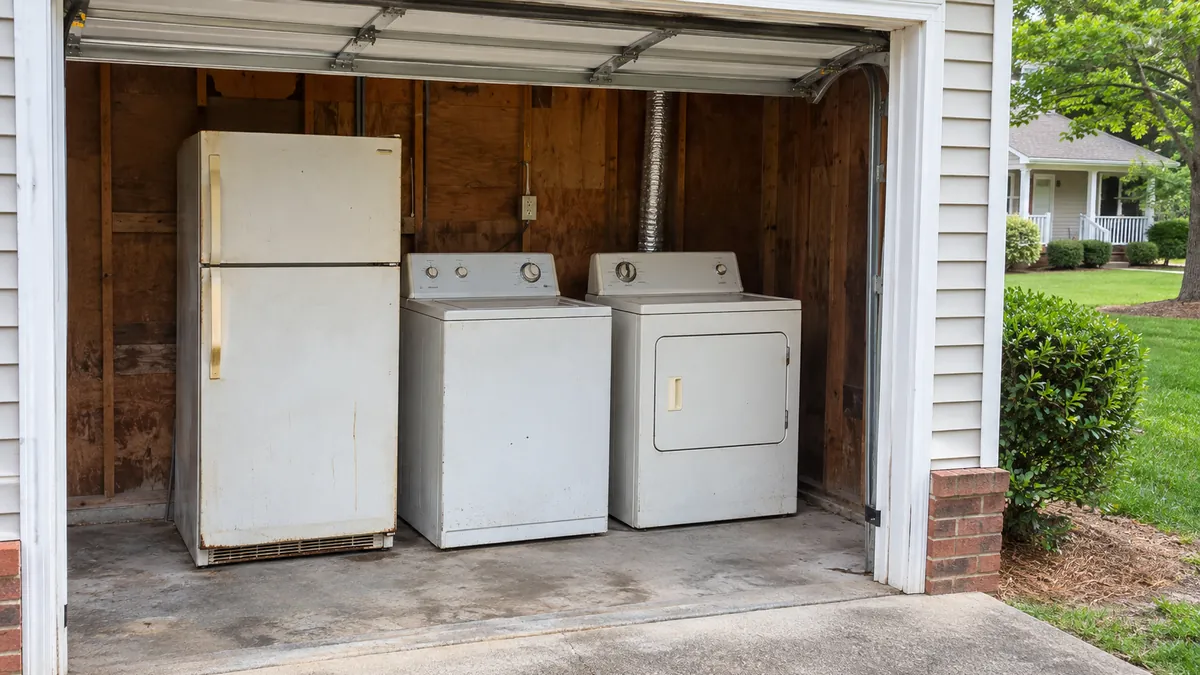
If you need to get rid of an old fridge, washer, or dryer in Apex, you have two main routes. You can drop it off at Wake County’s recycling facility in Apex, or you can call the town and ask about bulk pickup. It should not go in your trash or recycling cart, and Wake County’s neighborhood convenience centers do not accept it.
The rest of this guide fills in the details: what counts as an appliance, why the rules are stricter, how each option works, and how to get the appliance ready. The facts come from Wake County, the Town of Apex, the EPA, and the Consumer Product Safety Commission, and were checked in November 2026. Hours and rules can change, so call before you load the truck.
The Short Version
- Working and fairly new? Try a Habitat for Humanity ReStore or a store trade-in first.
- Broken or old, and you have a truck and a helper? Take it to the South Wake Multi-Material Recycling Facility in Apex.
- Want the town to collect it? Call Ask Apex at (919) 249-3311 first. The town’s bulk pickup page does not say whether appliances are included.
- Heavy, upstairs, or on a deadline? Hire a crew.
- Fridge, freezer, or A/C unit? It holds refrigerant, so never cut or puncture the tubing.
What Counts as an Appliance
Disposal rules group the big household machines together. The EPA’s list of major appliances, often called white goods, includes refrigerators, freezers, washing machines, dryers, air conditioners, stoves, and water heaters. Wake County’s facility list covers A/C and heating units, refrigerators, freezers, washers, dryers, and water heaters.
Why Appliances Have Their Own Rules
A trash or recycling cart is not made for a big machine, but size is only part of it.
Refrigerators, freezers, window air conditioners, and dehumidifiers contain refrigerant. The EPA says that refrigerant has to be recovered before one of these appliances is finally disposed of, so it does not leak into the air. The EPA puts that job on the final processor, such as a scrap metal recycler. That is why these appliances belong at a facility set up to handle them, not in a dumpster. The City of Raleigh also notes that North Carolina law keeps appliances out of landfills.
Option 1: Drop It Off at the Wake County Facility in Apex
Wake County runs the South Wake Multi-Material Recycling Facility at 6130 Old Smithfield Road, Apex, NC 27539. It is open Monday to Saturday, 8 a.m. to 4 p.m., so it is not open on Sundays.
The county’s list for these facilities includes A/C and heating units, refrigerators, freezers, washers, dryers, and water heaters. The county’s East Wake page also names dishwashers, stoves, and ovens. If you have one of those, call Wake County Solid Waste Management at (919) 856-7400 to confirm first. The facility page does not list a fee, so ask about that too.
Do not bring an appliance to a regular convenience center. The county says appliances are not accepted there. Our Apex convenience center guide covers what those sites do take.
Tips for the trip
- Bring a helper. Appliances are heavy and awkward.
- Secure the load. The county requires open vehicles to be tied down so nothing blows or spills.
- Plan around the hours, since the site is closed on Sundays.
Option 2: Ask the Town About Bulk Pickup
The Town of Apex picks up large items at the curb for a fee. Its page lists a $30 trip fee for 1 or 2 items and $15 each for 3 or more. The page does not mention appliances at all. They are not listed as accepted, and they are not on the refused list, which names construction debris, household hazardous waste, electronics, household recycling, and yard waste.
So the honest answer is to ask. Call Ask Apex at (919) 249-3311 and check three things:
- Can a fridge, washer, or dryer go on a bulk pickup?
- What will it cost?
- Does it need any preparation?
Do not leave an appliance at the curb and hope. Bulk pickup is for homes only, not for businesses or apartments. For the full town rules, see our Apex bulk item and yard waste guide.
Option 3: Sell, Donate, or Trade In
If it still works, someone may want it.
- Habitat for Humanity ReStore. Habitat’s own guide says household appliances should be less than 10 years old, in good working order, and have all their parts. Each store sets its own list, and most offer pickup for large items. Call your local store before you list anything.
- The store delivering your new one. The EPA notes that retailers with trade-in policies may pick up an old fridge or freezer for free. Ask when you place the order. It also says some utilities run programs for old refrigerators, so check whether yours does.
A broken appliance usually cannot be donated. For those, use Option 1 or Option 4.
Option 4: Hire a Crew
Some jobs are easier to hand off: a washer in a basement, a fridge on a second floor, or a house being cleaned out before closing. Our appliance removal service does the lifting and the hauling. If you have more than one appliance, or other items with it, we can take it all in one visit.
Appliances often come up in an estate cleanout or a rental turnover. To see what changes the price, read our junk removal cost guide. When you are ready, call 984-351-5299 or use our contact page for a free quote.
How to Get an Appliance Ready
Fridge or freezer
- Empty it and unplug it a day ahead.
- Do not cut, bend, or puncture any tubing or coils.
- The Consumer Product Safety Commission urges you to remove the door of any refrigerator you discard, and to secure any fridge kept outside so a child cannot climb in.
Washer and dryer
- Turn off the water, disconnect the hoses, and drain them.
- Tape or tie the cord so it does not drag.
- For a gas dryer, ask a licensed professional to disconnect the gas line.
Water heater
- Turn off the power or gas, and have a licensed plumber disconnect and drain it.
Any appliance
- Measure your doorways, clear a path, and tell whoever is moving it about stairs or tight turns.
- Old fridges and chest freezers often sit in garages. If yours is part of a bigger clear-out, our garage cleanout guide can help you plan it.
Apex Appliance Questions
Does the Town of Apex pick up appliances?
The town’s bulk item page does not say. It does not list appliances as accepted or refused. Call Ask Apex at (919) 249-3311 before you put one at the curb.
Can I put an old fridge out with my regular trash?
No. A fridge should not go in your trash or recycling cart. Ask the town about bulk pickup, or take it to the county facility.
Does Wake County take old refrigerators?
Yes, at its Multi-Material Recycling Facilities. The neighborhood convenience centers do not take appliances.
Where can I drop off a washer or dryer near Apex?
The South Wake Multi-Material Recycling Facility, at 6130 Old Smithfield Road in Apex. It is open Monday to Saturday, 8 a.m. to 4 p.m.
How much does it cost to get rid of an old appliance in Apex?
It depends on the route. The county facility page lists no fee, so ask when you call. The town’s bulk fees are a $30 trip fee for 1 or 2 items and $15 each for 3 or more, but confirm that appliances are included. A crew prices by the job, so ask for a free quote.
Do I have to remove the refrigerant myself?
No, and you should not try. Leave the sealed system alone and bring the appliance in one piece. The EPA says the final processor is responsible for making sure refrigerant is recovered before disposal.
Can I donate a broken appliance?
Usually not. Habitat’s guide says appliances should be in good working order. A broken one needs to be recycled or hauled away.
Why should the door come off an old fridge?
A child can climb inside and get trapped. The Consumer Product Safety Commission recommends removing the door of any refrigerator you throw away.
Other Towns Nearby
Appliance rules change from town to town. Morrisville, for example, runs a white goods collection every three months for residents on town curbside service, with sign-up required. Our crew works in Morrisville, Cary, and Holly Springs, as well as Apex.
Sources: Wake County Multi-Material Recycling Facilities and Convenience Centers; Town of Apex Bulk Item Collection; Town of Morrisville White Goods Collection; City of Raleigh Appliances and White Goods; EPA safe disposal of refrigerated household appliances; Consumer Product Safety Commission refrigerator entrapment guidance; Habitat for Humanity ReStore donation guide.